
.svg)


.svg)
.svg)
.svg)
.svg)
.svg)

Resources
Blog
Case Studies
War in UkrainePrivacy Policy
Terms and Conditions
FAQ
.png)
.png)

Acvian Platform

EOR
PEO
HR Service
to your unique needs.
Payroll
Immigration Support
international hires.

with a people-first approach to the table.
Customer care is our top priority.
About Us
Our Services
Our Team
Why Acvian
Careers
as much as our clients’.
Partner with Us
Our Offices

Relocation to Croatia in 2026: a comprehensive guide for expats
Inhabited since prehistoric times, the territory of present-day Croatia bears the traces of Roman, Byzantine, Venetian, and Habsburg rule, while a strong sense of local identity has survived every empire that passed through. The country declared independence in 1991 following the turbulent dissolution of Yugoslavia, rebuilt with remarkable speed after a war that lasted until 1995, and completed its course of European integration by joining NATO in 2009, the European Union in 2013, and both the Schengen Area and the eurozone in January 2023.
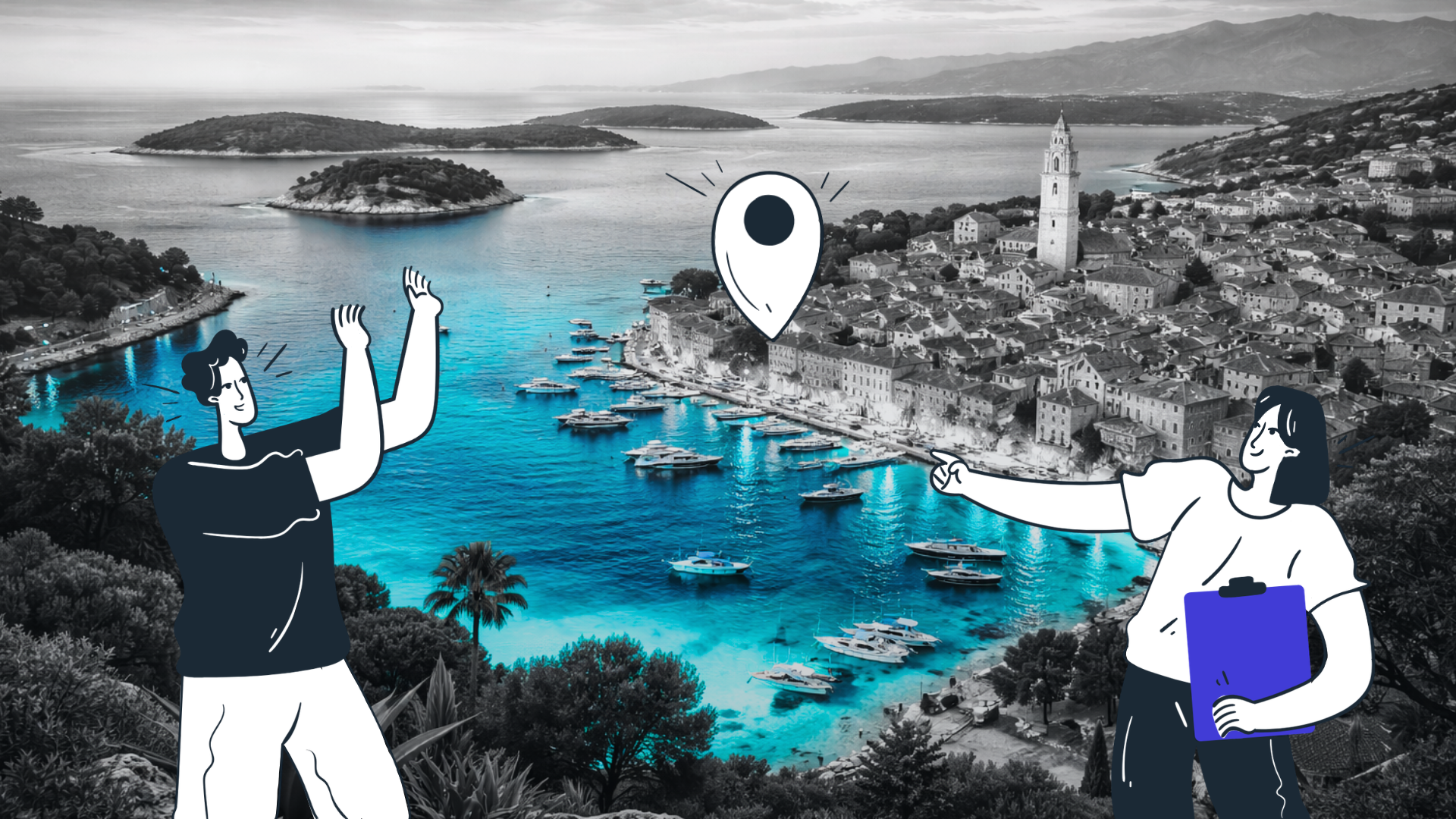
Croatian culture is warm and unmistakably Mediterranean: hospitality is a given, and a deep appreciation for good food, music, and coastal living shapes the rhythm of everyday life. For a country of under 4 million, Croatia is an economic overperformer: GDP grew by 3.4% in 2025 (well above the EU average), driven by strong household consumption, wage increases, and EU-funded investment, with growth projected to remain solid at 2.5% in 2027 according to the European Commission's official economic forecast. For internationals, Croatia’s cultural and economic appeal is clear: full EU, Schengen, and eurozone membership, Adriatic summers, walkable old towns, affordable restaurants, and active demand for foreign talent (see the next section) that pricier Western European destinations simply cannot match.
In this relocation guide, we cover the unique advantages of Croatia’s current labor market, available visa paths for employed professionals in 2026, the local tax landscape, the most popular expat hubs, key living essentials, and tips for overcoming the potential challenges of work-related immigration.
🧳Interested in relocating to or hiring in Southeastern Europe? Explore our guides to other popular destinations in the region: Bulgaria and Romania.
Since 2020, Acvian has been operating as an EOR provider with a strong focus on Europe, including the Balkans. Over the years of our regional presence, we’ve accumulated extensive administrative and legal expertise, along with a deep understanding of local business culture, all of which are essential for supporting newcomers planning to work and live here. In this guide, we share the key aspects of moving to Croatia in 2026: in-demand industries, visa and tax frameworks, lifestyle essentials, and practical tips for a faster and smoother relocation.
What are the most in-demand sectors for international employment in Croatia?
.png)
As of late 2026, Croatia is facing a demographic challenge that directly affects the country’s demand for foreign talent: an aging population and persistent emigration of working-age Croatians to Western Europe have opened a significant gap in sectors such as IT, healthcare, construction, tourism, and hospitality. All this with an already tight labor market and unemployment rate sitting below 5% in 2025-2026 (and forecasted to remain so in 2027).
The OECD's 2026 Economic Survey of Croatia explicitly highlights the need to attract foreign workers, and the country follows suit: in the early 2020s, a record number of work permits were issued. A more recent shift towards the extension of existing permits over issuing permits for newcomers suggests that keeping foreign professionals in Croatia has become just as important as attracting them in the first place.
The highest demand and most relocation-friendly conditions exist in the following sectors:
- Croatia’s IT and tech are foreigner-friendly due to a growing startup ecosystem in the capital city Zagreb, specifically in software engineering, gaming, SaaS, and technology entrepreneurship, alongside an established outsourcing industry that is actively competing for international talent. Besides, third-country IT/tech professionals who are eligible for the EU Blue Card (more on this in the next section) are exempt from labor market test, therefore easily recruitable.
- A transformation is currently underway in fintech. Since the country’s economy is heavily reliant on tourism and e-commerce, there is a growing demand for up-to-date digital banking, scalable payment, and crypto infrastructure. This, combined with an outflow of highly skilled Croatian professionals to larger EU economies, creates a demand for fintech talent from abroad.
- Engineers and specialists in manufacturing, including production operation, machine operation, and quality control, are on Croatia’s list of shortage occupations. For international job applicants, this means fewer administrative hurdles and faster paperwork processing.
- The largest volume of work permits is issued in tourism, hospitality, and construction. Apart from on-site help, particularly during the high season, the industries are in acute need of skilled professionals in hospitality management and construction project management.
- Last but not least, there is a considerable shortage of doctors, registered nurses, and care assistants, which reflects a broader European demand for third-country healthcare professionals. The Croatian government has explicitly stated the need to attract foreign talent to fill in the existing gaps.
What visa and work permit types are available to non-EU nationals intending to live and work in Croatia?
.png)
As of 2026, Croatia offers three visa paths for work or business purposes: the Single Work Permit (the standard combined residence and work permit), the EU Blue Card for highly qualified professionals, and the Digital Nomad Residence Permit for remote workers employed by foreign companies.
While the Blue Card has stricter eligibility requirements (more on this below), the Single Work Permit is suitable for a broader applicant pool. The Digital Nomad Residence Permit follows a separate application process and is designed exclusively for individuals working remotely for non-Croatian employers.
To enter Croatia for any of the above purposes, non-EU nationals must first obtain a long-stay Type D visa, which serves as the entry document; the subsequent permit is obtained after arrival.
For the Single Work Permit applicant, the path looks like this:
- Their future employer contacts the Croatian Employment Service (HZZ) for a labor market assessment, demonstrating that no qualified Croatian or EU national is available for the position. As mentioned in the previous section, professions on Croatia's official shortage list, including most IT, engineering, healthcare, and senior management roles, are exempt from this requirement. AFTER or WITHOUT the labor market test, depending on the individual case, the applicant obtains a long-stay Type D Visa at a Croatian embassy or consulate in their home country. At this stage, various documents are required: a valid passport, proof of academic and/or professional qualifications, an employment contract, a criminal record certificate (apostilled and translated into Croatian), and the employer's company registration documents and tax clearance.
- Once the Type D visa is secured, the individual can enter Croatia and apply for a residence permit at the relevant police administration office. At this stage, additional documents such as proof of accommodation in Croatia and health insurance valid for the duration of stay must be provided.
The average visa processing time for obtaining the Single Work Permit in Croatia is 6 to 10 weeks. Once issued, the permit is valid for up to 3 years.
💡GOOD TO KNOW: Following the May 2026 amendments to the Foreigners Act, after 6 months of initial employment, Single Work Permit holders can take up an identical or similar position with a different employer during the permit's validity period without restarting the full application process. The new employer must obtain an HZZ opinion within 5 days, and the full process must be resolved within 45 days.
Croatia was one of the first EU countries to introduce a dedicated residence permit for remote workers, with the Digital Nomad Residence Permit coming into force on 1 January 2021. Commonly referred to as the digital nomad visa, it is technically a temporary permit that does not require a Type D visa before the applicant’s arrival. Instead, they can enter Croatia visa-free or on a short-stay visa and submit the permit application in person at the local police administration office.
.png)
To be eligible for the Digital Nomad Residence Permit in Croatia, the non-EU individual must:
- Be employed by or own a company registered outside Croatia, with all work performed remotely and zero income from Croatian sources.
- Meet a minimum monthly income threshold of EUR 3,622.50 as of March 2026, set at 2.5 times the average Croatian net monthly salary. Alternatively, the applicant may provide proof of savings: ≥EUR 43,470 for a 12-month stay or ≥EUR 65,205 for the full 18-month duration of the permit.
- Provide the following documents: valid passport, proof of remote employment or business activity outside Croatia, a 6-months’ worth of bank statements, criminal background certificate from home country (apostilled and translated into Croatian), proof of accommodation, and private health insurance for the duration of their stay in Croatia.
Croatia EU Blue Card: who is eligible in 2026 and how to apply?
.png)
In 2021, Croatia adopted the EU Blue Card (Plava karta EU) programme, which is a combined residence and work permit for highly qualified non-EU nationals. The 2026 reform expanded eligibility to include ICT professionals without a formal university degree, making it an increasingly accessible route for experienced tech talent.
To apply for the EU Blue Card in Croatia, the applicant must:
- Meet the qualification level and the minimum salary threshold of 1.5 times the Croatian average, which translates to approx. EUR 2,300/month gross in 2026, or EUR 3,024/month gross for IT specialists specifically. It is worth noting that, unlike in some EU countries, eligibility for the EU Blue Card in Croatia is not sector-restricted, and common qualifying occupations include software engineers, AI and cybersecurity specialists, doctors, nurses, and engineers.
- With a prior work permit approval obtained by the prospective employer, apply for a long-stay Type D Visa at a Croatian embassy or consulate in their home country. At this stage, required documents include a valid passport, an employment contract (a minimum of 1 year), proof of a university degree recognised in Croatia (or, for IT professionals specifically, proof of ≥3 years of relevant professional experience assessed by a three-member competency committee), and a criminal record certificate (apostilled and translated into Croatian).
- Upon arrival in Croatia with a secured Type D visa, submit the Blue Card application at the relevant police administration office. Additional documents required at this stage include proof of accommodation in Croatia and health insurance valid for the duration of stay.
The average processing time for the EU Blue Card in Croatia is 2 months. Once issued, the permit is valid for up to 4 years.
💡GOOD TO KNOW: During the first 2 years, an EU Blue Card holder may change employers only with prior authorisation from Croatian authorities. After 2 years, only a notification is required.
Do expats need to pay taxes in Croatia?
.png)
Croatia has a progressive tax system for employment and self-employment income. For non-residents (individuals without a permanent residence permit), only Croatian-sourced income is taxable. In 2026, personal income tax rates are approx. 15-22% for annual income up to 60,000 EUR and approx. 25-33% for income above 60,000 EUR.
In addition to personal income tax, foreign employees are subject to mandatory social security contributions, which the employer withholds from their gross monthly salary: 20% for pension (deducted from the employee’s gross salary) and 16.5% for health insurance (paid by the employer and not directly deducted from the employee’s salary). For Digital Nomad residence permit holders, there are no compulsory social security deductions; however, private health insurance must be maintained for the duration of their stay in Croatia and paid for individually.
🪙Need more clarity? Get an accurate forecast of your net (after-tax) income in Croatia using the Payroll Cost Estimator tool.
What is life like for expats in Croatia?
.png)
Picture this: a Mediterranean climate with generous sunshine hours along the coast, a regionally diverse cuisine shaped by Italian, Slavic, and Balkan influences, a high level of safety, and convenient access to the rest of the EU and Schengen Area. On a more practical level, English proficiency is very high among locals, and there is the possibility of 100% foreign ownership of locally registered companies. And of course, there are countless opportunities for outdoor recreation, from swimming and hiking to exploring more than 1,000 islands and national parks.
The cost of living in Croatia is generally lower than in Western Europe. Rent for a one-bedroom apartment in central urban areas typically ranges from EUR 600 to EUR 1,000, while overall monthly expenses start at around EUR 1,200 for singles, EUR 2,200 for couples, and EUR 2,800 for families of four.
Expect higher living expenses in Zagreb and in popular coastal locations such as Split, Dubrovnik, Zadar, and Pula, as well as in regions like Istria and Kvarner. Inland cities are more affordable, with monthly expenses for singles usually falling between EUR 1,000 and EUR 1,300.
Are you interested in moving to Croatia for work? Or are you representing a business and exploring the fastest and safest way to relocate your team to Croatia?
.png)
To employers, we offer an Employer of Record (EOR) solution: we hire and manage teams locally on your behalf without the need to establish a legal entity and handle the entire employment cycle.
If you are an employed professional who wants to live and pay taxes in Croatia without quitting your remote position at a foreign company, EOR is an option worth sharing with your current employer!
Is your company in search of a reliable partner for payroll services in Croatia?
.png)
We can function as your outsourced payroll team in Croatia under the umbrella of EOR or as a separate service package.
We have an in-depth understanding of the local landscape and are happy to provide you with detailed information. Book a meeting with our expert or submit a request form, and we’ll be in touch with you soon!
Related articles for you
.png)


We employ your team overseas


.svg)