
.svg)


.svg)
.svg)
.svg)
.svg)
.svg)

资源
.png)

.png)


2026年移居克罗地亚:外籍人士综合指南
Croatia has been popular with digital nomads and location-independent professionals for a while now, and unsurprisingly so. Its combination of Balkan hospitality, the relative affordability typical of Southeastern Europe, and an extensive coastline along the Adriatic Sea offers the benefits of Mediterranean living without the high costs associated with more heavily promoted seaside destinations in Southern Europe.

🧳Interested in relocating to or hiring in Southeastern Europe? Explore our guides to other popular destinations in the region: Bulgaria and Romania.
Since 2020, Acvian has been operating as an EOR provider with a strong focus on Europe, including the Balkans. Over the years of our regional presence, we’ve accumulated extensive administrative and legal expertise, along with a deep understanding of local business culture, all of which are essential for supporting newcomers planning to work and live here. In this guide, we share the key aspects of moving to Croatia in 2026: in-demand industries, visa and tax frameworks, lifestyle essentials, and practical tips for a faster and smoother relocation.
Moving to Croatia for work or business: what industries are in demand?
Croatia’s economy is growing and diversifying rapidly. With numerous coastal and inland mountain resorts and over 3 million overnight stays registered in the first quarter of 2026 alone, tourism remains a key pillar, driving demand in the hospitality, food, and service industries. The tech sector, particularly software, fintech, and biotech, is also on the rise: in 2024, 12 Croatian tech companies were featured in Deloitte’s EMEA Fast 500 list. The country is also actively investing in renewable energy and infrastructure. High-demand industries like tourism and construction face chronic labor shortages, so the recruitment of foreign talent is incentivized by the Croatian government. In 2025, the validity periods of work permits, EU Blue Cards, and Digital Nomad visas were extended compared to previous timeframes.
Do expats need a visa to work in Croatia?
To live and carry out professional activity in Croatia long term, non-EU nationals must obtain a residence and work permit. Depending on the applicant’s qualifications and intended purpose of stay, the following types of visas/permits are available in 2026:
- The Work (Type D) Visa, which is suitable for individuals employed by Croatian companies and may require prior approval from the Croatian Employment Service following a labor market test. Applicants must submit a valid ID, an employment contract, proof of relevant qualifications and/or experience, and a criminal record certificate from their country of origin. This type of visa is valid for up to 3 years, with a typical processing time of 4 to 8 weeks.
- The EU Blue Card, which is intended for highly qualified professionals employed by companies registered in Croatia. To be eligible, applicants must provide an employment contract of at least 1 year, proof of higher education, and a salary meeting the threshold of at least 1.5 times the national average. This permit is valid for 2 to 4 years.
- The Digital Nomad Visa, which is designed for employed or self-employed individuals earning income from non-Croatian sources. In addition to proof of foreign income (e.g. an employment or service contract, or company registration documents) meeting a minimum threshold of 3,622.50 EUR per month, applicants must submit a valid ID, proof of health insurance for the duration of their stay, a criminal record certificate from their country of origin, and a confirmed address of residence in Croatia. This visa is valid for up to 18 months.
Do expats need to pay taxes in Croatia?
Croatia has a progressive tax system for employment and self-employment income. For non-residents (individuals without a permanent residence permit), only Croatian-sourced income is taxable. In 2026, personal income tax rates are approx. 15-22% for annual income up to 60,000 EUR and approx. 25-33% for income above 60,000 EUR.
In addition to personal income tax, foreign employees are subject to mandatory social security contributions, which the employer withholds from their gross monthly salary: 20% for pension (deducted from the employee’s gross salary) and 16.5% for health insurance (paid by the employer and not directly deducted from the employee’s salary). For Digital Nomad visa holders, there are no compulsory social security deductions; however, private health insurance must be provided for the duration of their stay in Croatia and paid for individually.
💡Need more clarity? Get an accurate forecast of your net (after-tax) income in Croatia using the Payroll Cost Estimator tool.
What is life like for expats in Croatia?
Picture this: a Mediterranean climate with generous sunshine hours along the coast, a regionally diverse cuisine shaped by Italian, Slavic, and Balkan influences, a high level of safety, and convenient access to the rest of the EU and Schengen Area. On a more practical level, English proficiency is very high among locals, and there is a possibility of 100% foreign ownership of locally registered companies, making Croatia an extremely attractive EU base for international entrepreneurs and employees alike. And of course, there are countless opportunities for outdoor recreation, from swimming and hiking to exploring more than 1,000 islands and national parks.
生活成本 在克罗地亚普遍低于西欧。市中心一居室公寓的租金通常在600至1,000欧元之间,而 每月总开销 单身人士约为1,200欧元起,夫妻约为2,200欧元起,四口之家约为2,800欧元起。
预计在 萨格勒布 以及在热门沿海城市,例如 斯普利特、 杜布罗夫尼克、 扎达尔和 普拉,以及在诸如 伊斯特拉 和 克瓦内尔. 内陆城市生活成本更低,单身人士的月开销通常在1,000到1,300欧元之间。
您是否有兴趣移居克罗地亚工作?或者您代表一家企业,正在寻找最快、最安全的方式将您的团队迁至克罗地亚?
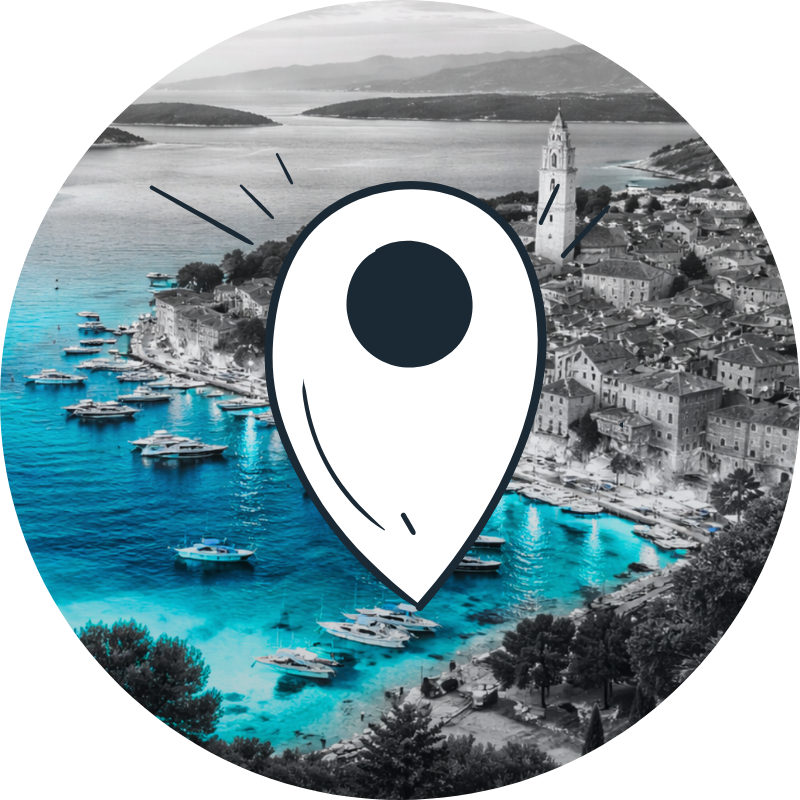
对于雇主,我们提供 EOR解决方案:我们代表您在当地招聘和管理团队,无需您设立法律实体。对于雇员和远程工作者,我们的 伞形公司 解决方案最适合:我们负责您的雇佣事宜,让您在为外国雇主工作的同时,能在当地生活并纳税。
我们的团队对当地情况有深入了解,很乐意为您提供详细信息。 预约与我们的专家会面 或 提交申请表,我们很快就会与您联系!
Related articles for you
.png)


我们雇佣您的团队在欧洲


.svg)